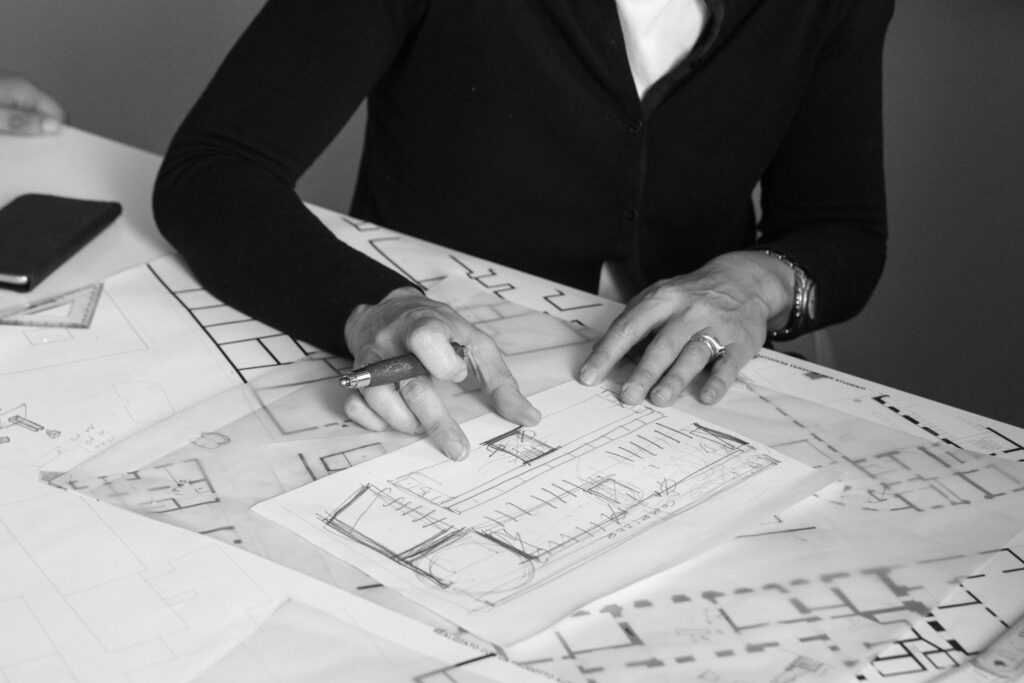
The Master’s Degree in Architectural Design and History stems from the belief that contemporary cities and territories, stratified over time, require design interventions focused on the reuse and enhancement of existing structures in order to reduce waste and promote sustainability. Over two years of theoretical modules and practical workshops, students learn to integrate digital and manual methods to analyse historical contexts, develop design proposals capable of responding to climatic and cultural challenges, and update traditional construction techniques with innovative solutions.
The “new” project constantly dialogues with the existing, generating strategies for reuse, consolidation, completion or architectural insertion that respect the forms, construction types and memory of the places.
The objectives are clear: to train designers capable of reading urban stratifications, selecting reuse and restoration strategies, and addressing complex environments with interdisciplinary approaches. The choice of the name Architectural Design “and” History reflects the desire to place history and design on the same level, encouraging a study plan focused on research, cultural influences and specificities, for which Mantova is a perfect laboratory.
For detailed information about the courses, please visit the dedicated page HERE
REGULATIONS
The supplementary regulations to the final exam HERE
MISSION
The educational programme is structured around five closely interconnected principles that shape both learning and design practice. Transdisciplinarity encourages dialogue across disciplines—ranging from history, structures, and technologies to artistic, regulatory, and management perspectives—in response to the complexity of contemporary architectural design. Context is understood as an active, layered condition shaped over time by natural processes and human intervention, requiring careful on-site analysis and a respectful approach to historical and territorial structures. Iteration lies at the core of learning, fostering solid and lasting knowledge through continuous exercises, experimentation, and feedback, allowing students to refine both their skills and design language. The identity of a project emerges from the ability to interpret urban traces, collective memories, materials, and spatial sequences, transforming them into strong and recognisable concepts that generate meaningful and lived-in places. Finally, the direct engagement with masters—through lectures, case studies, and studio critiques—constitutes the core of the programme, supporting the development of students’ critical and design autonomy. The Mantova Campus offers a small-scale learning environment that promotes close interaction with faculty and personalised tutoring. Design studios alternate between architectural and urban scales, supported by thematic workshops, site visits, and ongoing dialogue with professional practitioners.
ContaCTS
Polo territoriale di Mantova Piazza d’Arco 3 46100 MANTOVA